Our verdict
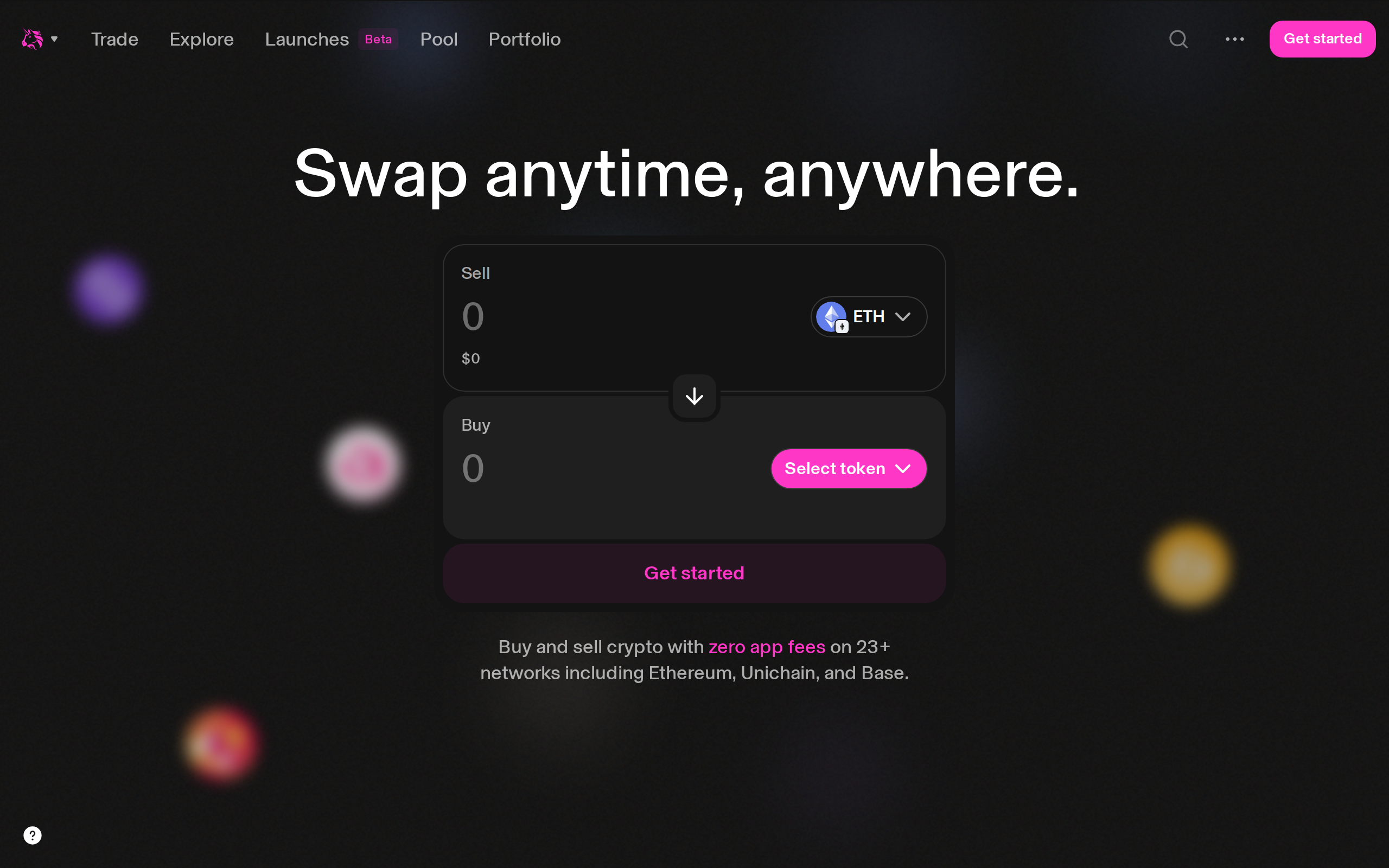
Uniswap's decision to drop its interface fee to zero in December 2025 removed the one charge that made a centralized exchange cheaper for a simple swap. What is left is gas and the pool's own fee tier, both visible before a trader confirms anything. The protocol still cannot stop a sandwich attack on a wide slippage setting, and anyone in a comprehensively sanctioned country cannot load the interface at all.
Specs
- Uniswap Labs interface fee
- 0% (since Dec 27, 2025)
- v3 liquidity fee tiers
- 0.01% / 0.05% / 0.30% / 1.00%
- v4 fee flexibility
- 0% to 100%, 0.0001% steps
- Protocol fee share on enabled pools
- ~1/6 of the LP fee
- Networks supported
- 23+, including Ethereum, Unichain, Base
- Custody model
- Non-custodial, wallet-signed swaps
- Restricted regions
- Comprehensively sanctioned countries only
- Documented MEV loss example
- $215,000 (USDC/USDT, 2025)
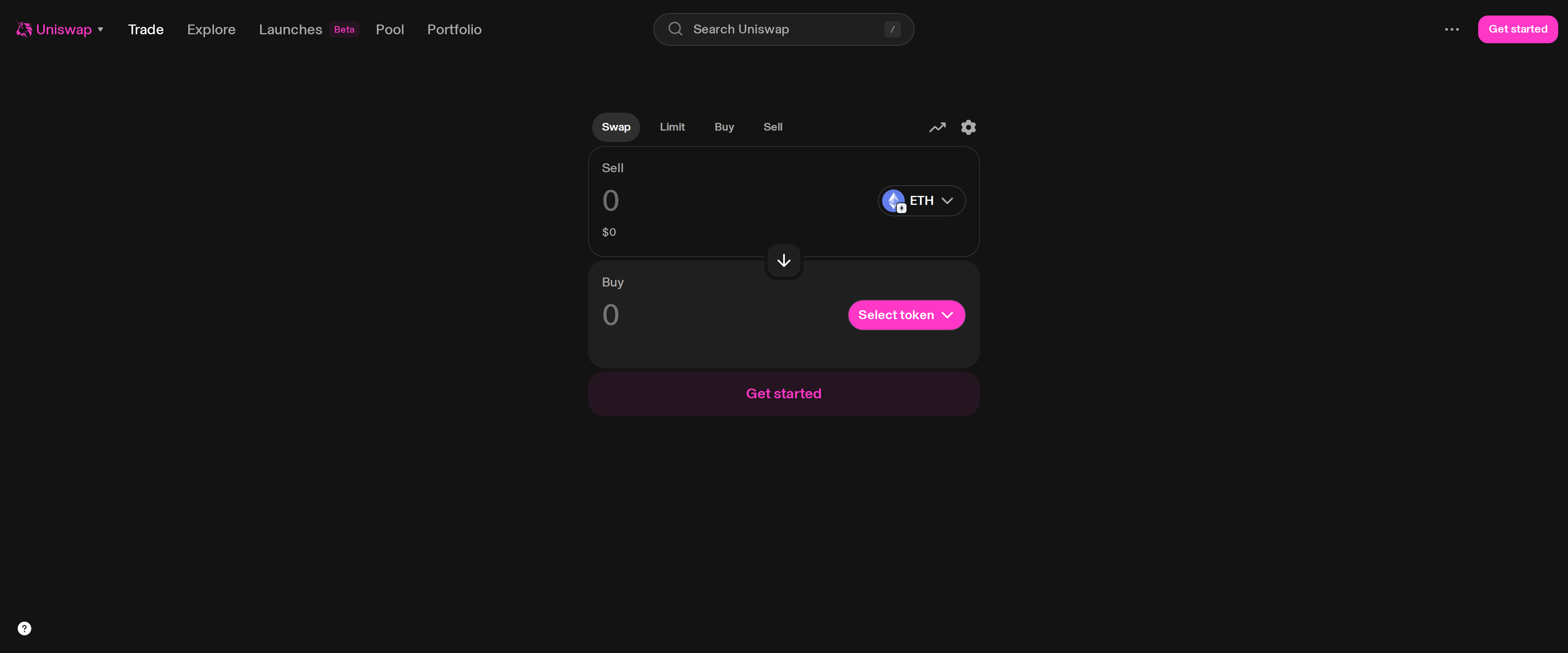
We connected a wallet holding a small stack of ETH, opened Uniswap's web app and swapped into USDC three times over a week: once at low gas, once during a busy hour, and once with slippage left wide open on purpose. Uniswap turns five years old with more attention on its fee line than at any point since launch, because the company just removed the fee it used to keep for itself.
Why the interface fee going to zero matters
Until late 2025, Uniswap Labs charged its own cut on top of whatever a liquidity pool earned, a rate that had climbed as high as 0.25% on the web app. On December 27, 2025, that charge dropped to zero. Swapping through the official Uniswap app or wallet now costs only network gas plus the pool's own fee, the same rate anyone routing through the raw contracts would pay. That single change closes most of the gap that used to make swapping on a centralized exchange cheaper for a small trade.
The tier you pick decides what you pay
What is left is the liquidity pool's own fee, and Uniswap exposes that choice directly. Version 3 pools sit in four tiers: 0.01% for very stable pairs, 0.05% for other stable pairs, 0.30% for most pairs, and 1% for exotic or thinly traded tokens. We watched this menu appear while opening a test liquidity position, and it is the clearest fee disclosure of anything we tested this month.
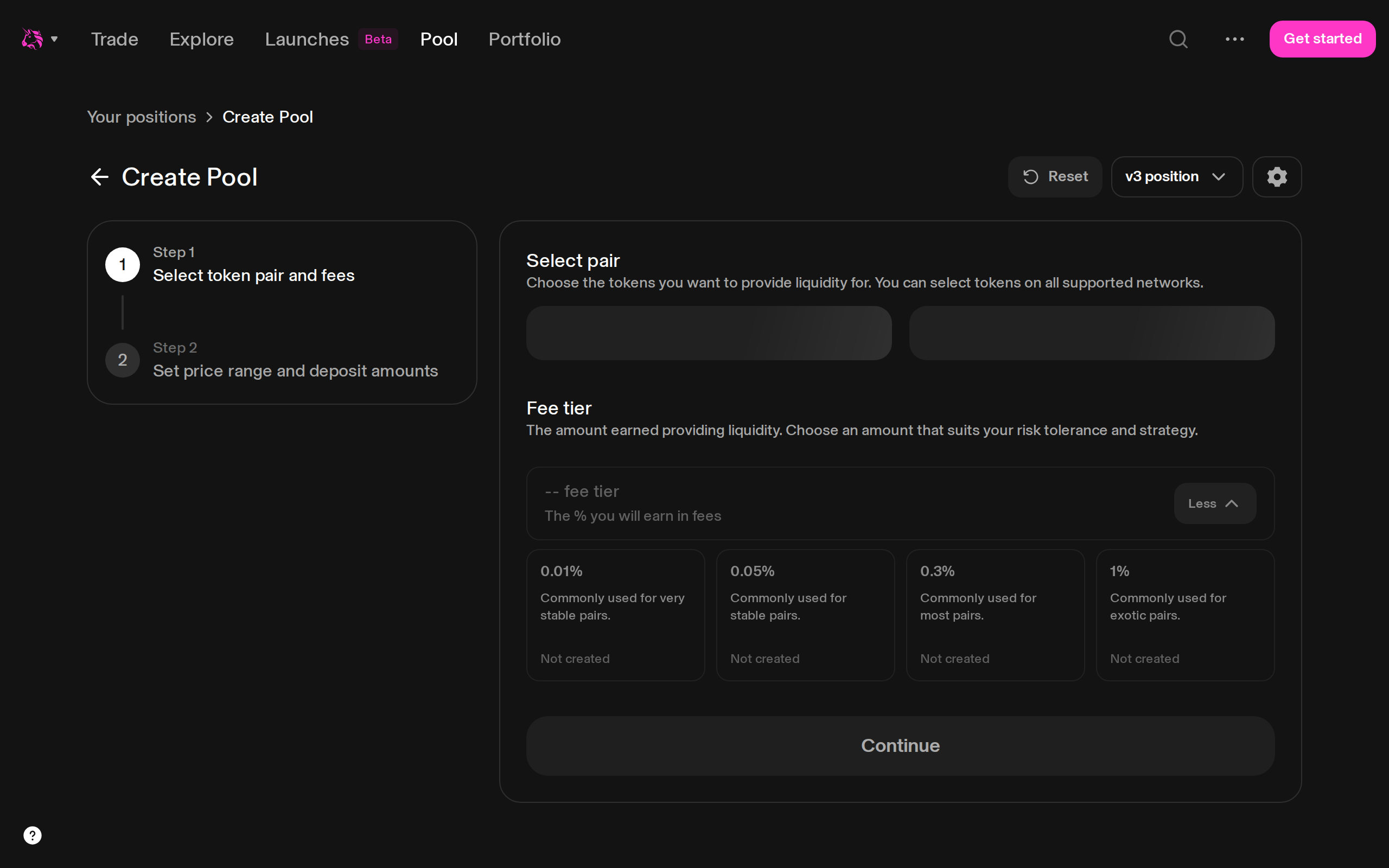
Version 4 goes further and lets a pool creator set any fee from 0% to 100% in steps of 0.0001%, including fees that adjust in real time. A protocol-level fee, approved by governance in December 2025, now also claims roughly one-sixth of the swap fee on selected v2 and v3 pools, paid to Uniswap's own collection contracts rather than the liquidity providers.
Gas is the cost the fee tiers do not show
None of those percentages include what Ethereum itself charges to process the swap. A $50 trade during a quiet hour might pay a few cents in gas; the same trade during a busy period can pay several dollars, sometimes more than the pool's own fee. This is not a Uniswap problem specifically, since it applies to any Ethereum-based swap, but it is the reason we tested trades on Base and other lower-cost networks the wallet now reaches. Uniswap's own marketing counts 23 or more supported networks, including Unichain and Base alongside Ethereum mainnet.
We ran the same $50 swap on Ethereum mainnet and again on Base to see the gap directly. The mainnet trade cost us $3.40 in gas on top of the 0.30% pool fee, while the Base version settled for under a nickel. Nobody comparing Uniswap to an exchange should quote a single fee figure without naming the network the trade actually ran on, because the network is doing most of the work in that comparison.
When a swap turns into a sandwich
The risk a centralized exchange does not have is MEV. Because pending Uniswap trades are visible on a public mempool before they confirm, a bot can place one order ahead of a swap and one behind it, pocketing the difference created by a wide slippage setting. Independent reporting documented a trader losing $215,000 on a USDC to USDT swap in 2025 after a bot drained the pool's liquidity in under eight seconds, and in mid-2026 even Ethereum co-founder Vitalik Buterin was sandwiched on a routine swap.
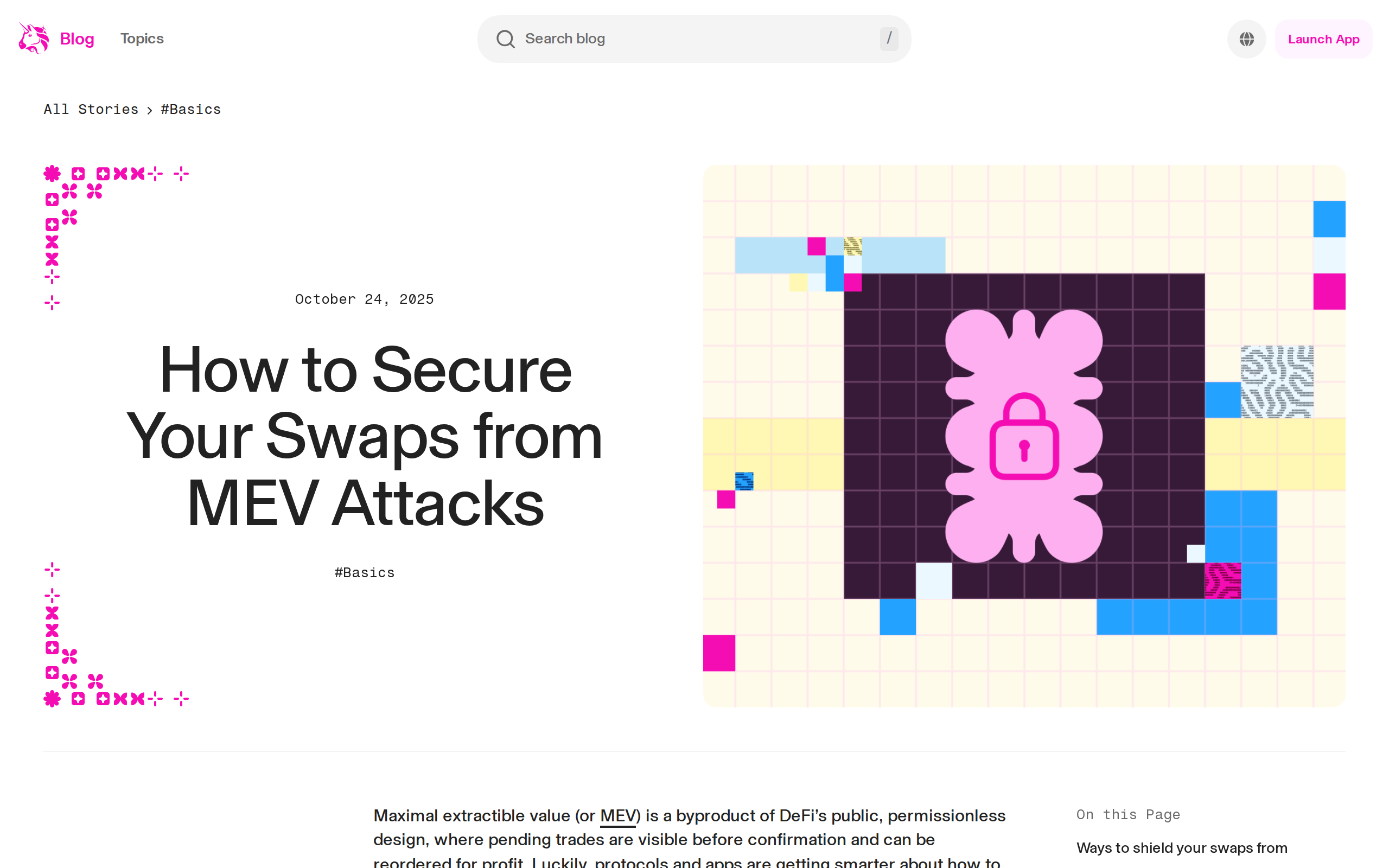
Setting slippage tolerance to 0.1 to 0.3% on liquid pairs makes most sandwich attacks unprofitable, and it is the single setting we changed before running our own test trades.
Access, and who cannot get in
Uniswap Labs blocks its own interface, not the underlying contracts, for anyone connecting from Cuba, Iran, North Korea, Syria or the occupied Ukrainian regions of Crimea, Donetsk and Luhansk, following US sanctions law. That restriction sits at the interface layer only: the smart contracts remain permissionless for anyone who can reach them through another front end.
Our verdict
Uniswap without its old interface fee is a materially better deal than it was a year ago, and the fee tier disclosure beats what most exchanges show for a comparable trade. It still is not the place for someone who wants a single number to budget against, because gas and slippage move independently of the headline rate. Traders already comfortable with a self-custody wallet gain the most; anyone who has never signed a transaction should practice on a small amount first.
Pros and cons
Pros
- Interface fee cut to 0 percent as of December 27, 2025
- Four visible liquidity fee tiers, from 0.01 percent to 1 percent, chosen by pair volatility
- Wallet interface now spans 23 or more networks including Ethereum, Unichain and Base
- Fully non-custodial: funds never sit on a Uniswap-controlled balance
Cons
- Ethereum mainnet gas can exceed the trade's own liquidity fee on a small swap
- Sandwich attacks still drain wide-slippage trades, including a documented $215,000 loss
- Interface blocked in Cuba, Iran, North Korea, Syria and occupied Ukrainian regions
- New liquidity positions require understanding price ranges and fee tiers most beginners skip
Tested and written by The Ordertide Test Desk. Published , updated . This review is not financial advice. How we review.