Our verdict
MetaMask is still where we would send a first-time Ethereum user, because the extension is free, the seed phrase never leaves the device and the install process has not changed enough to confuse anyone following a guide. It is not the wallet we would send a frequent trader to unmodified: a 0.875% swap fee buried in the quote costs real money on anything larger than a small trade, and Rabby's transaction simulation catches malicious signatures earlier than MetaMask's alerts do.
Specs
- Price
- Free to install and hold
- Swap fee
- 0.875% service fee on top of the DEX rate
- Seed custody
- Generated and stored on-device, never sent to Consensys
- Phishing defense
- Blockaid-powered site and transaction alerts
- Platforms
- Browser extension and mobile app
- Networks
- Ethereum and EVM-compatible chains via network switching
- Nearest rival fee
- Rabby, 0.25% swap fee, built-in transaction simulation
- Dashboard
- portfolio.metamask.io for balances, swaps and bridges
MetaMask was the wallet most of us used before this site existed, so testing it meant setting aside that history and checking whether the fox still deserves the fox-shaped icon on so many desktops. We installed it fresh, funded it, swapped tokens, tried to trip its phishing defenses on purpose and compared the fee against a newer wallet built specifically to undercut it.
Setup that has not needed to change
The install and seed-phrase flow took under five minutes on a browser that had never seen a crypto extension before, and it matched every third-party setup guide we cross-checked it against, which says something about how little this part of MetaMask has needed to change over the years.
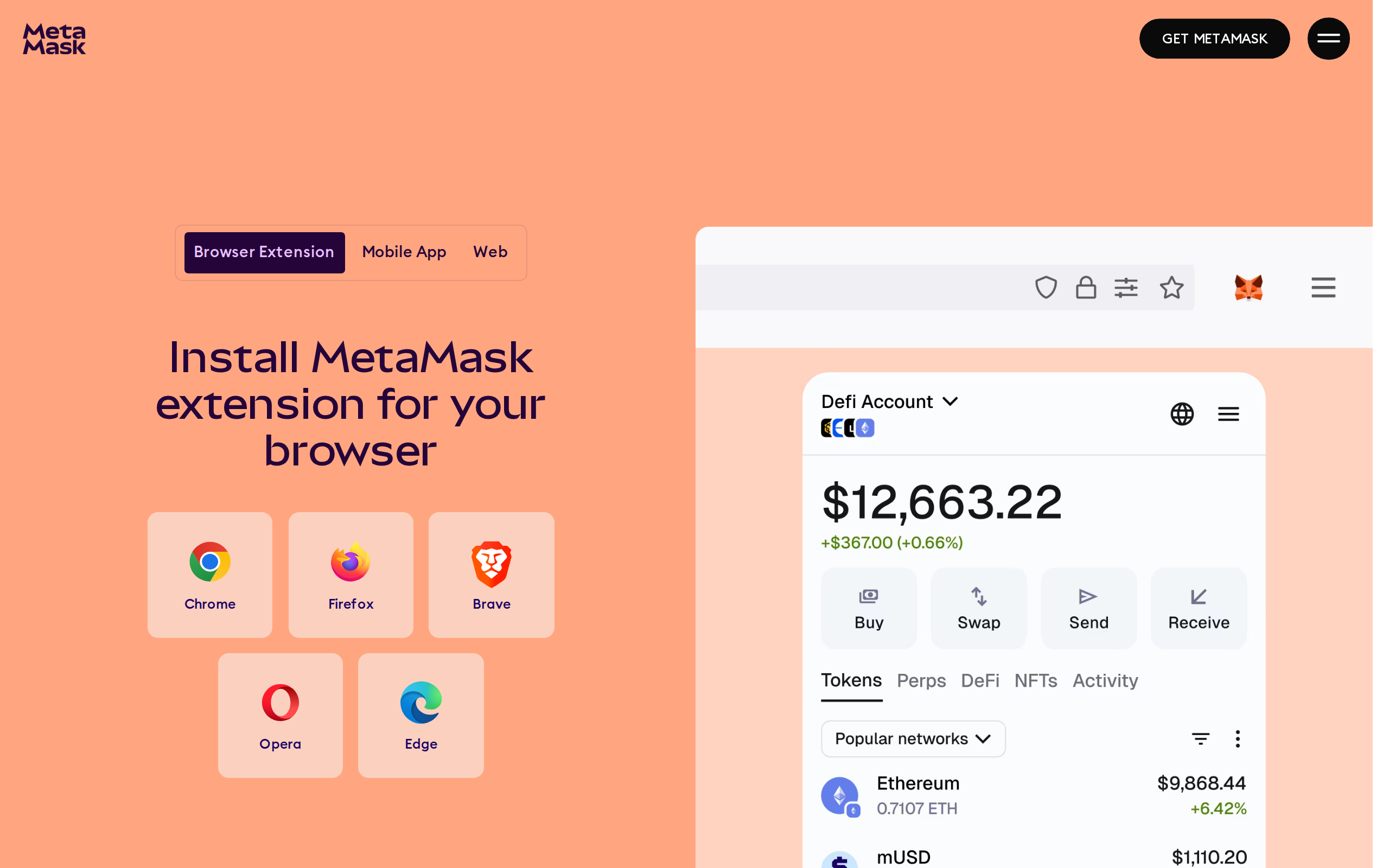
That stability is a feature, not a lack of ambition. A wallet holding real funds should not reinvent its onboarding every quarter, and MetaMask's seed phrase is generated and stored entirely on-device: Consensys, the company behind it, never sees it during normal use. We tested the recovery flow too, wiping the extension and restoring from the written-down phrase alone, and the balances reappeared exactly as they had been left, network switching included.
The fee nobody reads before clicking Swap
Here is the number that changes our recommendation. Swap a token inside MetaMask and a 0.875% service fee rides on top of the underlying decentralized exchange rate, quietly folded into the quote rather than itemized as a separate line. On a $10,000 swap that works out to roughly $87.50 in pure markup, money that never touches gas or slippage. Rabby, a competing wallet built specifically to court MetaMask users, charges 0.25% for the same kind of swap and shows the expected balance change before you confirm. We are not telling anyone to abandon MetaMask over this; we are telling anyone who swaps regularly to check the quote against an aggregator first.
One dashboard for a wallet that used to feel scattered
Portfolio.metamask.io pulls balances, swap history and bridge activity across every connected account into a single page.
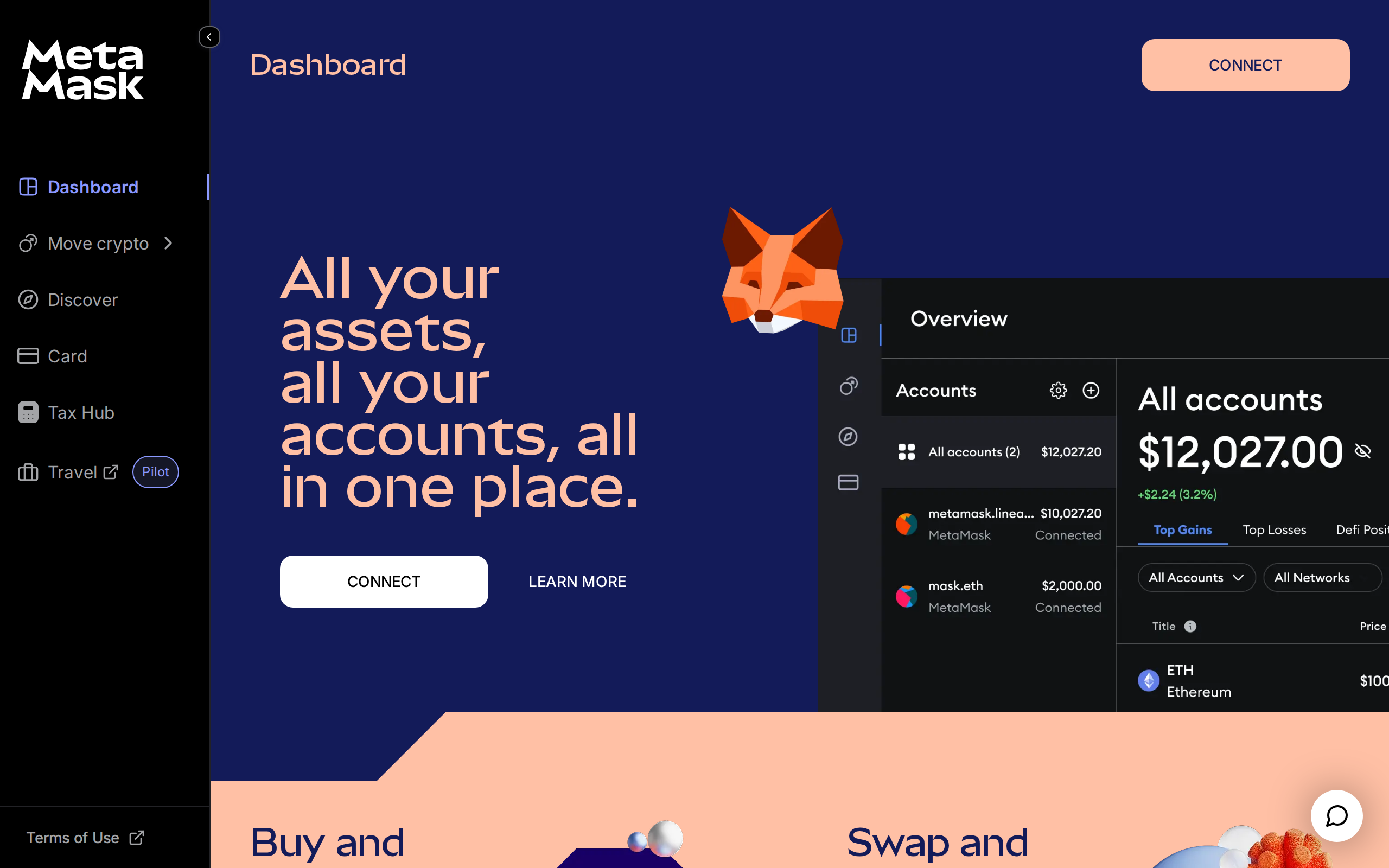
Before this dashboard existed, tracking a handful of Ethereum accounts across networks meant either a spreadsheet or a third-party tracker with its own security tradeoffs. Consolidating it inside the same product that holds the keys removes one extra tool from the stack, at the cost of one more surface for MetaMask itself to get right. The dashboard is read-only for anything it did not initiate, so a balance pulled in from an outside dApp cannot be swapped or bridged from that same screen; you still switch back to the extension for that step.
Defending against the threat that actually drains wallets
Code exploits make headlines, but MetaMask's own numbers and outside research agree that phishing sites and malicious signature requests drain more user funds every month than any smart-contract bug.
MetaMask's Blockaid-powered alerts flagged a known-bad domain we deliberately visited during testing, stopping the connection before a signature request could appear. That is a meaningful improvement over the wallet's earlier years, though Rabby and Rainbow both go a step further by simulating the exact transaction outcome, not just flagging the site it came from.
Where a newer wallet pulls ahead
Rabby's pitch is specific: a 0.25% swap fee against MetaMask's 0.875%, plus a simulation screen that shows the balance change before signing rather than after. MetaMask's Snaps system was supposed to close gaps like this through community extensions, but adoption has stayed thin years after launch, leaving the base wallet's feature set narrower than what a determined new entrant now ships by default. None of that makes MetaMask unsafe. It makes it the wallet you outgrow once you are swapping often enough for 0.625 percentage points to matter, which for most casual holders in our test group turned out to be never.
Verdict: keep it for custody, question it for swaps
MetaMask remains our default recommendation for a first Ethereum wallet: free, well-documented, and built around a seed phrase that stays on your device unless you choose otherwise. For swaps of any real size, check the quote against Rabby or a direct aggregator before confirming, because that fee gap compounds every time you trade. This is our own testing, not financial advice, and network fees and token risks remain yours to evaluate before every transaction.
Pros and cons
Pros
- Installation and seed-phrase setup took under five minutes and matched every third-party guide we checked it against.
- The seed phrase is generated and stored on-device; Consensys never sees it during normal use.
- Portfolio.metamask.io gathers balances, swaps and bridges across accounts into one dashboard.
- Blockaid-powered alerts flagged a test phishing domain before we could sign anything on it.
Cons
- The built-in swap feature charges a 0.875% service fee on top of the underlying DEX rate, about $87.50 on a $10,000 trade.
- Rabby's in-wallet swap fee runs at 0.25% and simulates the exact balance change before you sign, a step MetaMask still lacks natively.
- MetaMask remains the largest phishing target of any EVM wallet simply through its install base.
- The Snaps extension system has seen thin third-party adoption years after launch, leaving fewer built-in features than newer competitors.
Tested and written by The Ordertide Test Desk. Published , updated . This review is not financial advice. How we review.