Our verdict
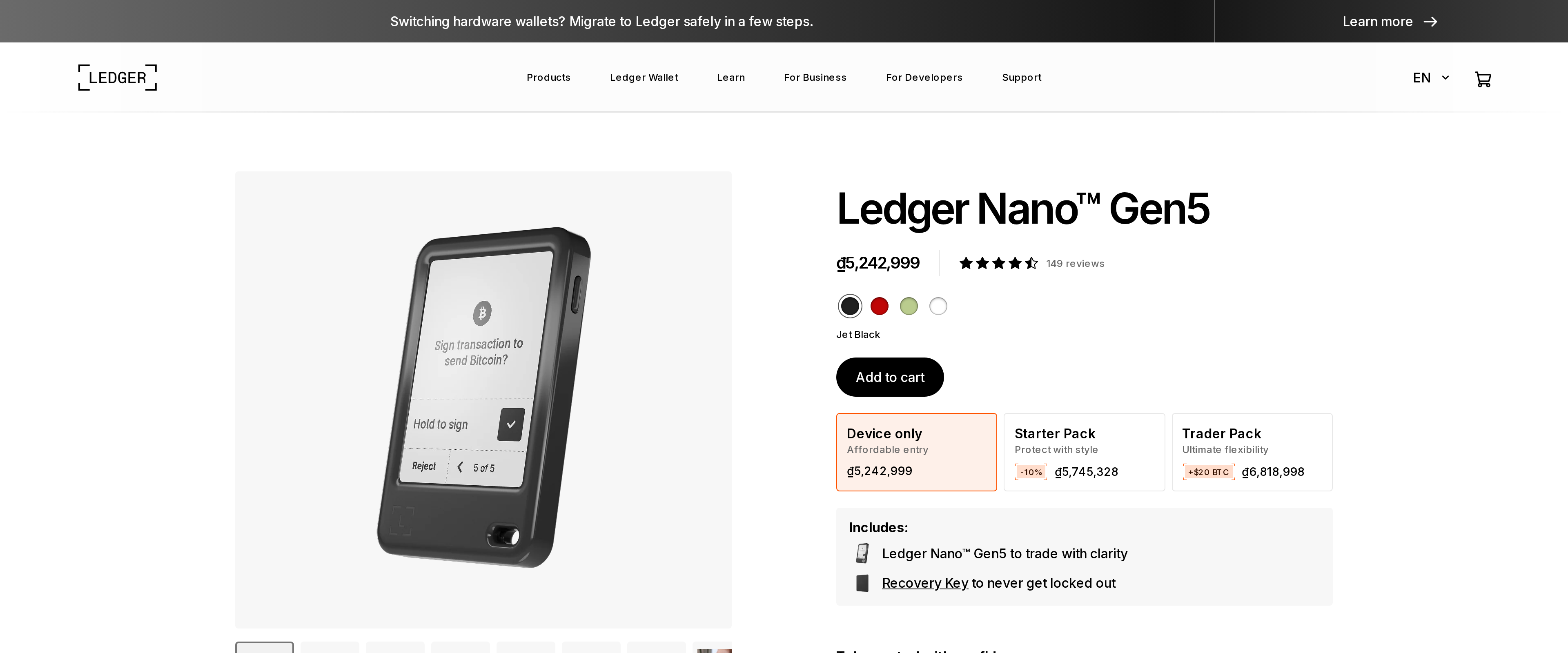
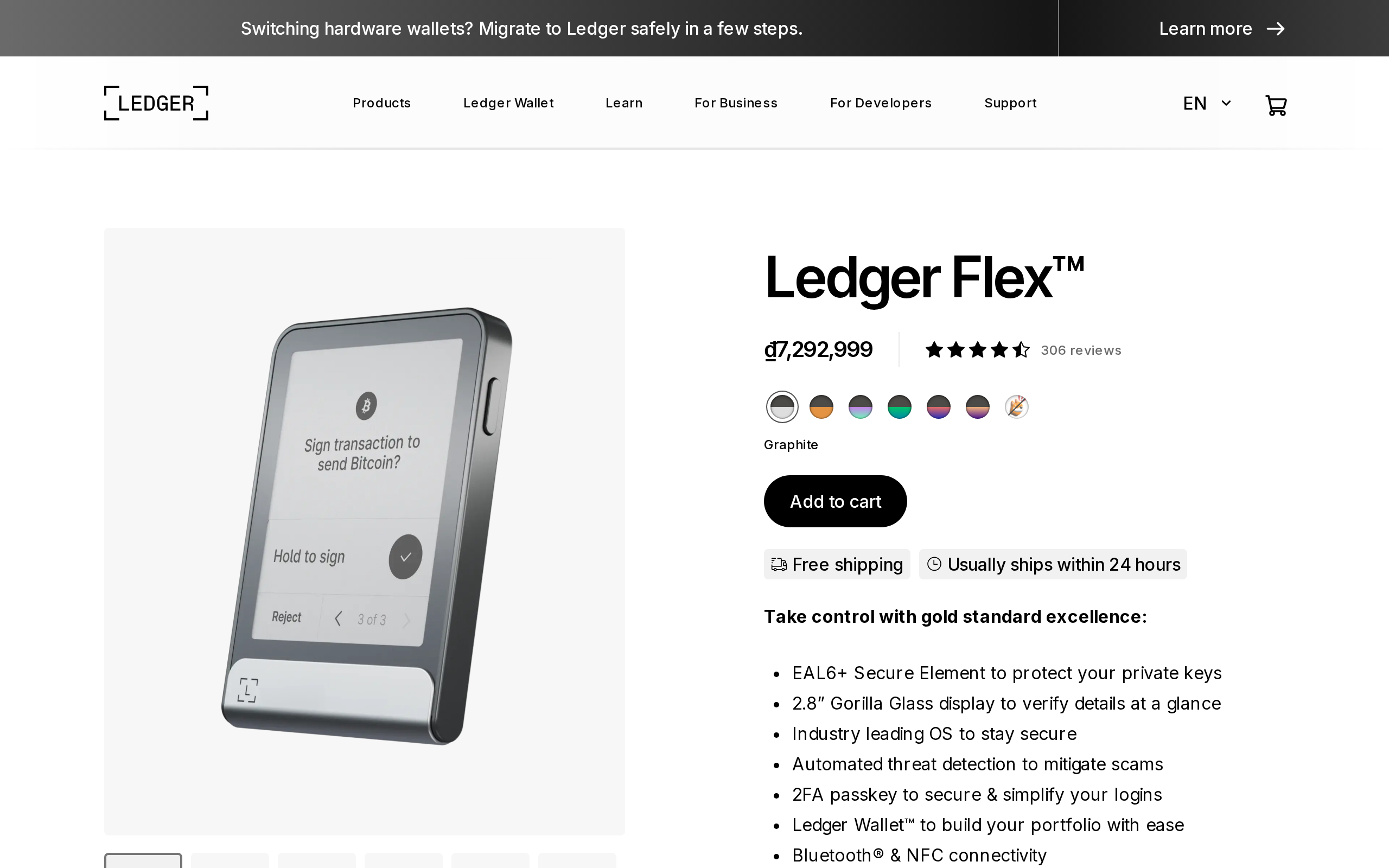
The Ledger Flex is the better piece of hardware: a bigger EAL6+ secure element, a touchscreen you can actually read a full address on, and NFC that a Nano X does not have. None of that changes what you are protecting, a private key, and a Nano X protects the same key for $100 less. Buy the Flex if you sign transactions often enough that the screen matters daily; buy a Nano if a wallet mostly sits in a drawer.
Specs
- Price
- $249
- Screen
- 2.84-inch E Ink touchscreen, 480x600, 16 grays
- Secure element
- ST33K1M5, EAL6+ certified
- Connectivity
- USB-C, Bluetooth and NFC
- Battery
- Roughly 10 hours of active use per charge
- Companion app
- Ledger Live, 5,500+ coins and NFTs
- Nano X comparison price
- $149, EAL5+ chip, no touchscreen, no NFC
- Optional backup service
- Ledger Recover, paid, opt-in seed-shard backup
Two Ledger devices sat on our desk for this review: a Nano X we already trusted and a new Flex still in its box. The question was not whether the Flex is secure. It is whether the extra hundred dollars buys something a working wallet actually needs.
Why the screen matters more than the spec sheet suggests
Every hardware wallet review lists the same secure-element numbers, so we started with the part you feel every time you sign something: the display. Ledger's own product page leads with the same claim it has used for two device generations, an EAL6+ secure element, and buries the screen further down where most buyers scroll past it.
A Nano X shows a receiving address a few characters at a time, forcing you to scroll and trust that the middle section matches what your software wallet displayed. The Flex's 2.84-inch E Ink touchscreen puts the whole address on one screen at once, in a resolution sharp enough to read every character without squinting. We caught a one-character mismatch during setup that a scrolling display would have made easy to miss, and that alone justified the panel for anyone who signs transactions weekly rather than yearly.
The chip underneath, in plain numbers
Ledger built the Flex around the ST33K1M5 secure element, certified EAL6+, one step above the Nano X's ST33 chip at EAL5+. Both certifications come from independent labs and both have held up against publicly disclosed attacks so far; the difference is a margin of assurance, not a fix for a known flaw. NFC is the more practical upgrade: we confirmed a transaction by tapping the Flex against a phone, skipping the USB-C cable the Nano X still requires for that step.
Ledger Live carries both devices the same way
Setup, firmware updates and coin management all run through Ledger Live, and the Flex offered nothing here that the Nano X does not already do.
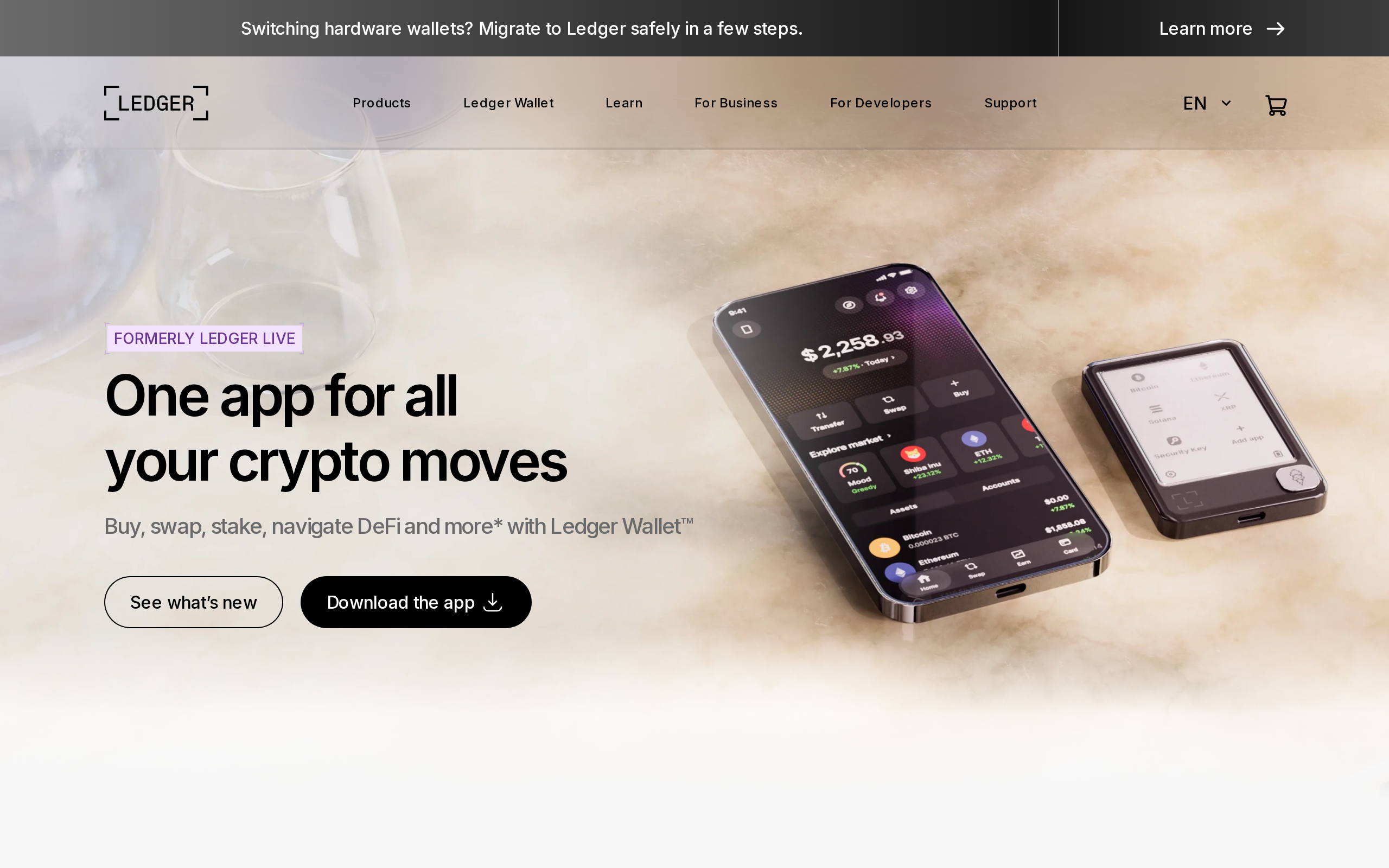
Ledger Live covers more than 5,500 coins and NFTs, supports staking and swaps inside the app, and treats both devices as interchangeable hardware behind the same interface. If you already own a Nano and like Ledger Live, buying a Flex changes the screen and the chip, not the software you spend most of your time in.
What a Nano X still gets you for less
We pulled up the Nano X page side by side with the Flex to check whether $100 buys anything beyond a screen.
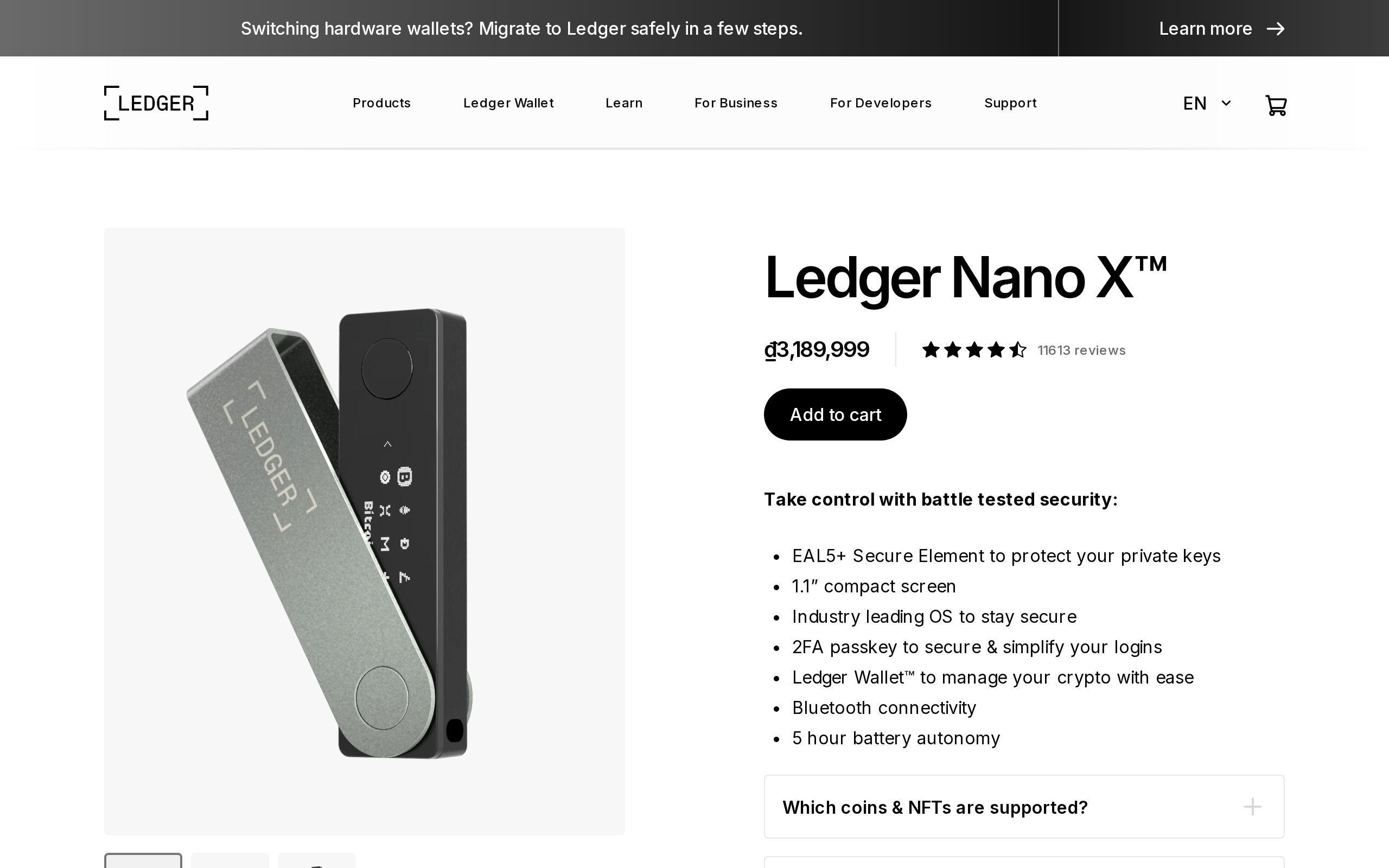
At $149, the Nano X keeps Bluetooth, the same coin coverage through Ledger Live, and a secure element that has protected funds for years without a disclosed compromise. It loses the touchscreen, NFC and the newer chip generation. For someone who sets up a wallet once, moves coins to it and checks it every few months, that trade is an easy one to make in the Nano's favor.
The Recover question, answered plainly
No Ledger review is complete without addressing Ledger Recover, the optional paid backup service Ledger launched in 2023.
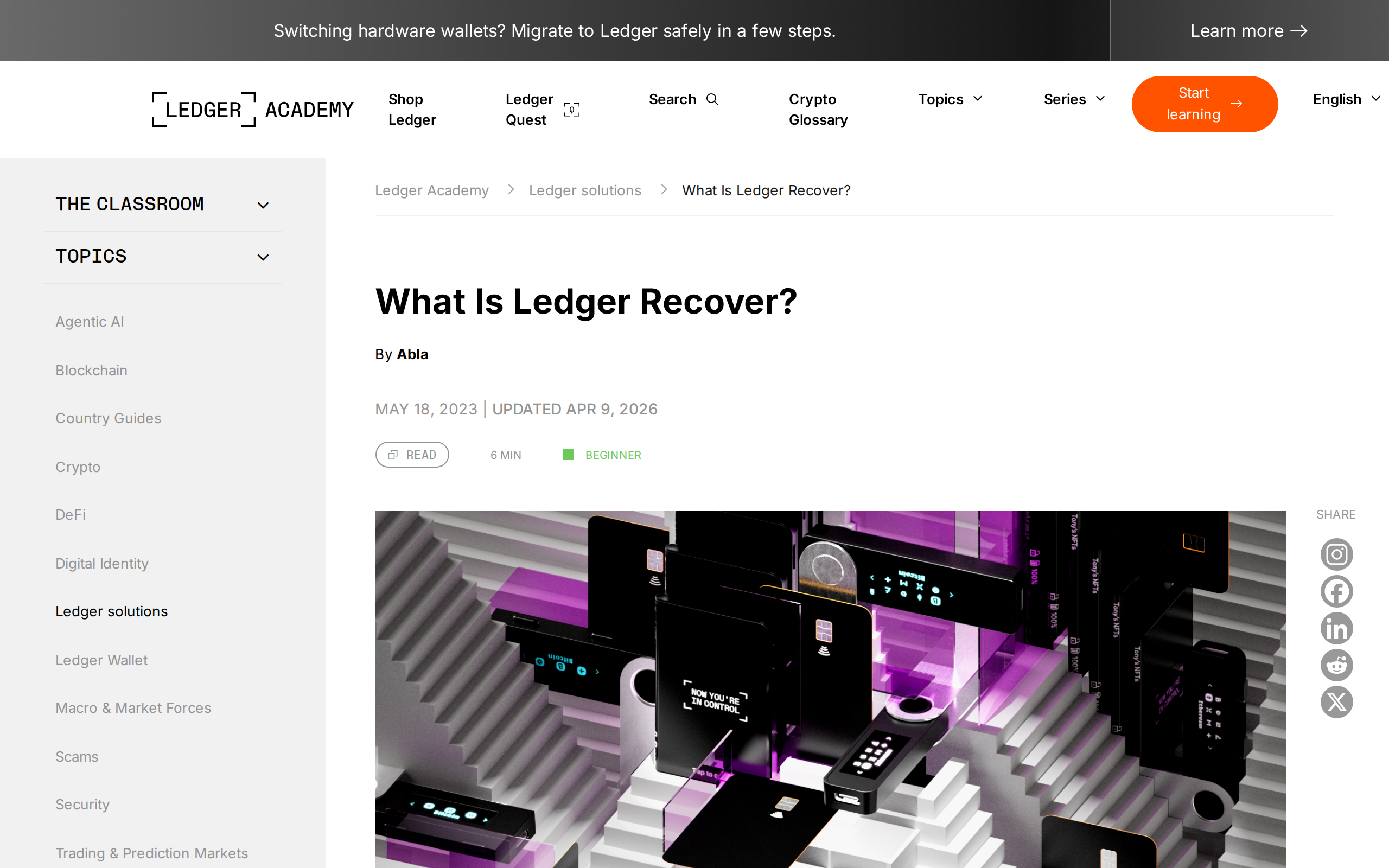
The announcement revealed that Ledger's firmware is technically capable of exporting an encrypted, sharded copy of a seed phrase with the owner's consent, which contradicted years of marketing that a seed could never leave the device. Ledger paused the rollout, opened more of its firmware to outside review and shipped Recover as strictly opt-in. Leave the feature untouched, as we did during testing, and neither the Flex nor the Nano X behaves any differently than before the announcement. The episode is worth knowing before you buy, not a reason to avoid the hardware, but it is also why we keep this section in every Ledger review rather than assuming readers already know.
Verdict: pay for the screen, not the security
Judged purely on security margin, the Flex and the Nano X both do the one job that matters: they keep a private key off a device connected to the internet. Judged on daily use, the Flex's touchscreen and NFC are worth $249 to anyone who signs transactions often enough to feel a scrolling four-line display as friction. Everyone else gets the same protection from a $149 Nano X and can put the difference toward the coins they are actually protecting. Nothing here is investment advice; it is a comparison of two pieces of hardware we set up and used ourselves.
Pros and cons
Pros
- The 2.84-inch E Ink touchscreen shows a full receiving address, ending the habit of trusting a truncated string on a Nano's tiny OLED.
- The ST33K1M5 secure element carries an EAL6+ certification, a step above the Nano X's EAL5+ chip.
- NFC pairing let us confirm a transaction from a phone without plugging in a cable.
- Ledger Live covers over 5,500 coins and NFTs from one app, the same software the Nano X uses.
Cons
- At $249 it costs $100 more than a Nano X for security most casual holders will not notice day to day.
- Battery life runs to roughly 10 hours of active use, shorter than a coin-cell-simple Nano S Plus.
- Ledger Recover, an optional paid seed-backup service, still reminds buyers that firmware can export encrypted shards with consent.
- The touchscreen adds a moving part and a glass surface a plain button-only Nano does not have.
Tested and written by The Ordertide Test Desk. Published , updated . This review is not financial advice. How we review.