Our verdict
Koinly earns its reputation as the fastest way to turn a messy multi-exchange history into a readable capital gains report, and the free preview lets you check that math before paying a cent. It is not a hands-off tool: users and our own test both found DeFi transactions and fee handling that needed a manual correction before the numbers matched what actually happened on-chain. Budget an hour of review time per tax year, not zero.
Specs
- Free plan
- Unlimited transactions, portfolio tracking, capital gains preview
- Newbie plan
- $49/year, up to 100 transactions
- Hodler plan
- $99/year, up to 1,000 transactions
- Trader plan
- $179/year, up to 3,000 transactions
- Pro plan
- $279/year, up to 10,000 transactions
- Integrations
- 1,000+ exchanges and wallets, 7,200+ DeFi protocols
- Country coverage
- Tax guides and reports for 20+ countries
- Does it file taxes
- No, it produces reports for your own filing or accountant
Tax season is where crypto's biggest selling point, moving money without a bank in the middle, turns into its biggest headache. We connected two exchange accounts and a self-custody wallet with DeFi activity to Koinly, ran a full preview report, then went back through the numbers by hand to see where the software agreed with reality and where it did not.
What twenty minutes actually gets you
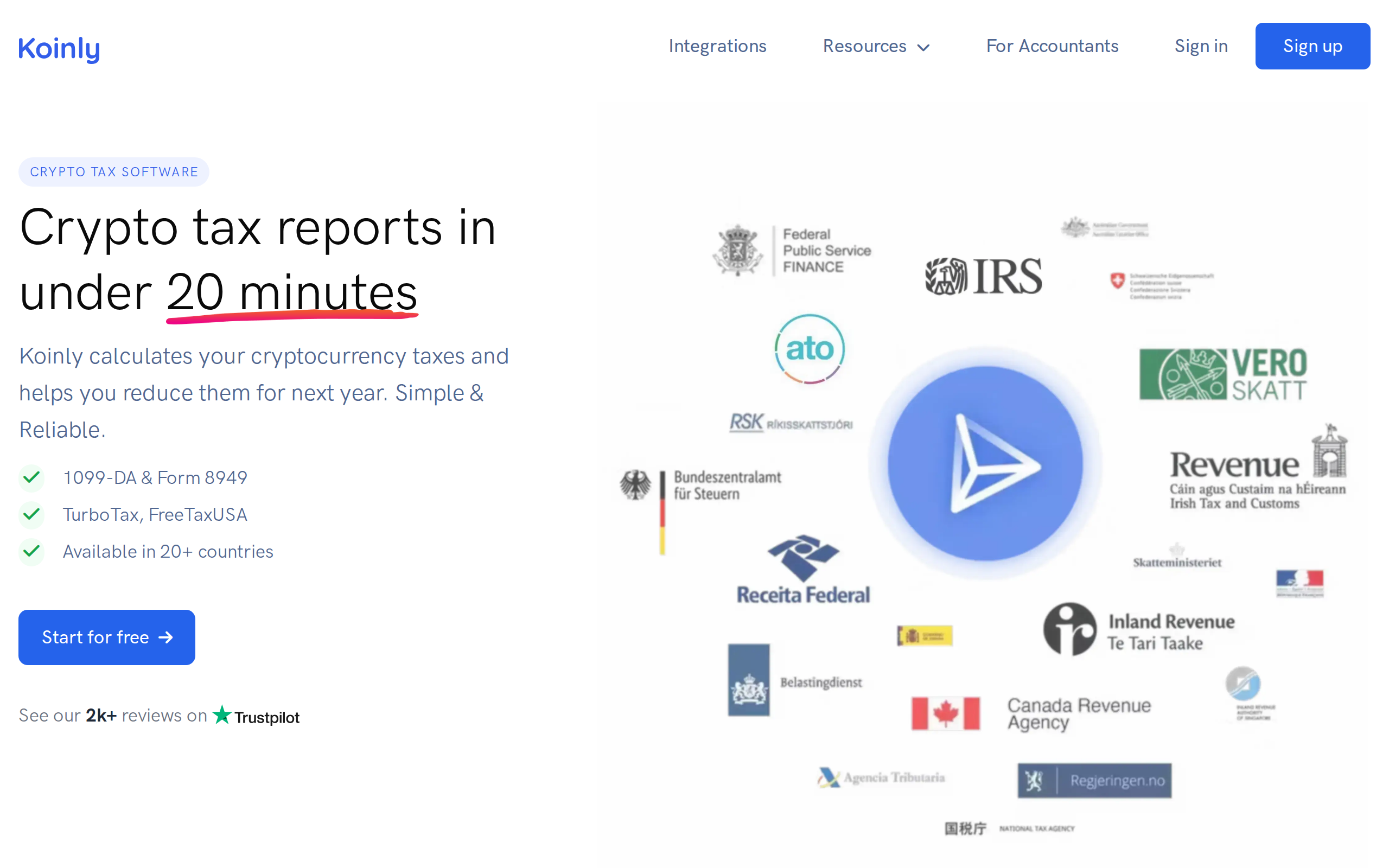
Koinly's homepage promises a report in under 20 minutes, and for a portfolio confined to centralized exchanges, that number held up in our test. The claim sits front and center on the site, not buried in a features page, which is a fair bet for Koinly to make given what we saw. Connecting two exchanges via API keys and letting Koinly sync the trade history took closer to fifteen minutes including the wait for historical data to pull in. The free plan tracks an unlimited number of transactions and shows the full capital gains calculation before asking for a card, which meant we could sanity-check the math before deciding whether a paid report was worth buying at all.
Where the coverage actually reaches
The bigger test was our self-custody wallet, which had touched a handful of DeFi protocols over the year.
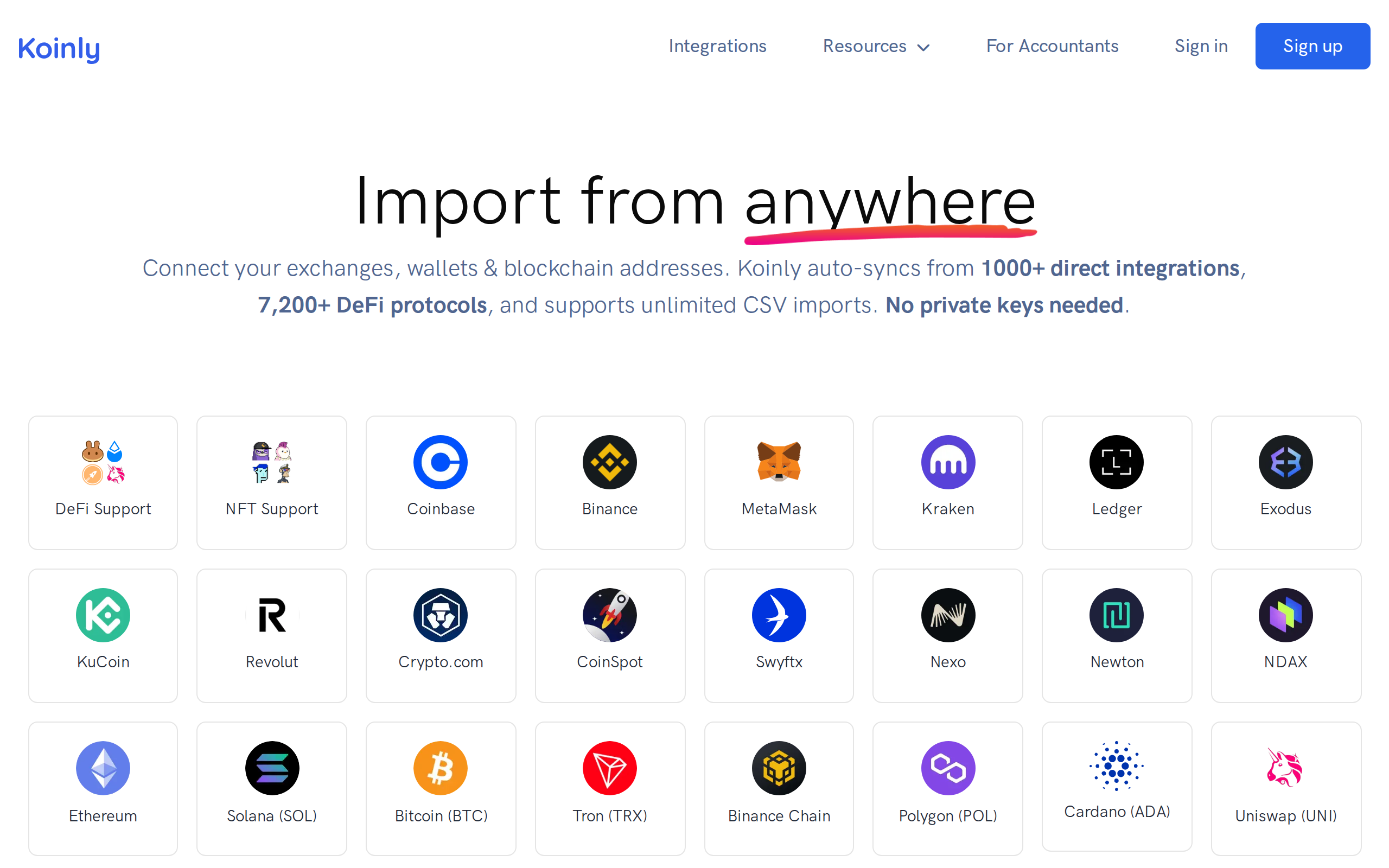
Koinly claims over 1,000 direct exchange and wallet integrations alongside more than 7,200 supported DeFi protocols, and our wallet's swaps and one liquidity pool position both showed up automatically once we added the public address. That is a wide net, wider than most rivals we have checked pricing against, though width is not the same as accuracy, which is the next problem.
The manual check we ended up doing anyway
Koinly labeled two small transactions from our liquidity pool exit as separate taxable trades rather than a single withdrawal, a pattern several users report independently and one that would overstate a gain if left uncorrected. We fixed it by hand in about ten minutes using Koinly's transaction editor, which does let you reclassify entries once you notice the mismatch. The catch is noticing it: someone filing without cross-checking against their own on-chain history could easily submit an inflated number. Budget time for this step. Koinly is a strong first draft of your tax report, not a finished one, and anyone with DeFi activity beyond simple swaps should expect to open the editor at least once.
Paying for the report itself
The free preview is generous, but generating the downloadable report for filing requires a paid plan, priced by transaction count rather than a flat subscription.
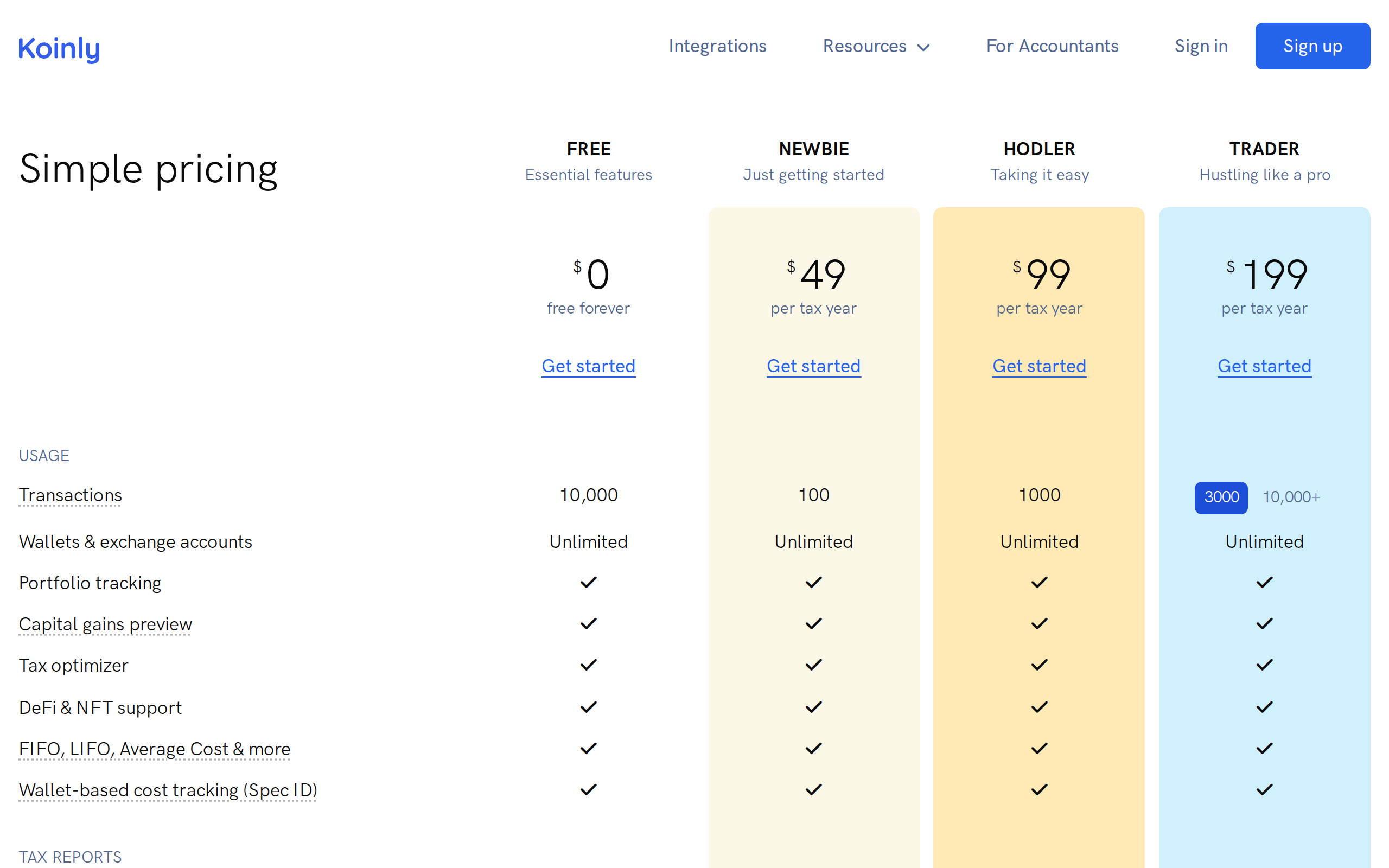
Newbie starts at $49 a year for up to 100 transactions, Hodler runs $99 for up to 1,000, Trader is $179 for up to 3,000, and Pro reaches $279 for up to 10,000. That structure means an occasional buyer pays close to the minimum while an active trader pays proportionally more, which is fairer than a single flat price for every user regardless of activity. Support, however, runs through a chatbot first, and escalating a technical import question to a human took longer in our test than the report generation itself did.
Filling the gap country guides leave open
Koinly backs its numbers with tax guides for more than 20 countries, explaining local treatment of staking, mining and DeFi income before you generate anything.

These guides set expectations well but do not replace an accountant for a complicated year; Koinly produces the report, it does not file your return or represent you if a tax authority asks questions. We used the guide for our own jurisdiction to confirm the cost-basis method Koinly had picked by default was actually the one our local rules require, and it was, though the software let us switch methods in a menu if it had not been.
Verdict: a fast draft, worth double-checking
Koinly delivered on its core promise: a scattered multi-exchange, multi-wallet history became a single readable report faster than doing it by hand ever could. The DeFi mislabeling we found, and that other users report consistently, means we would not submit a Koinly report unchecked if your year included anything beyond simple exchange trades. Use the free preview to judge your own case before paying, and treat the paid report as a strong draft rather than a finished filing. This review describes what we tested; it is not tax or legal advice, and your own jurisdiction's rules may differ from what any guide states.
Pros and cons
Pros
- The free plan tracks an unlimited number of transactions and shows a full capital gains preview before you pay anything.
- Over 1,000 direct exchange and wallet integrations plus 7,200+ DeFi protocols covered our entire test portfolio without a manual CSV.
- Paid tiers scale by transaction count, from $49 for 100 transactions up to $279 for 10,000, so casual traders are not paying trader-level fees.
- Country-specific tax guides covering more than 20 markets set expectations before you touch a single number.
Cons
- Several users report Koinly miscategorizing transaction fees as separate taxable trades, skewing the final gain figure.
- Complex DeFi activity, like liquidity pool entries and exits, still needs a manual check against on-chain data in our test.
- Support runs through a chatbot first, and reaching a human for a technical import problem took longer than we expected.
- Koinly generates the report; it does not file your return, so a paid plan is not the end of the tax process.
Tested and written by The Ordertide Test Desk. Published , updated . This review is not financial advice. How we review.