Our verdict
Gemini's pitch has always been trust before convenience, and the audit trail backs it up: SOC 1 and SOC 2 Type 2 reports from Deloitte, ISO 27001 certification, and $125 million in hot wallet insurance most rivals do not disclose in the same detail. That trust costs money, 0.6% maker and 1.2% taker on ActiveTrader before any spread, and it no longer reaches everyone; Gemini shut down UK, EEA and Australian retail accounts on April 6, 2026. If compliance and audits matter more to you than the lowest fee on the page, and you live somewhere Gemini still operates, it earns the premium. If you live in one of the exited markets, the question is already answered for you.
Specs
- Signup
- Free
- ActiveTrader base fee
- 0.600% maker, 1.200% taker
- Card purchase fee
- 3.49% on debit, Apple Pay and Google Pay
- Wire withdrawal fee
- $25 flat for USD wires
- Hot wallet insurance
- $125 million
- Audits
- SOC 1 Type 2, SOC 2 Type 2 (Deloitte), ISO/IEC 27001:2022
- Regions exited in 2026
- UK, EEA and Australia, effective April 6, 2026
- Active coverage
- 41 countries, including all US states, Puerto Rico and Washington, D.C.
Gemini has sold itself on trust since the Winklevoss twins founded it in 2014, long before "audited" became a word every exchange stamped on its homepage. We opened an account, ran a trade through both the basic app and ActiveTrader, and checked the fee schedule against what that trust actually costs.
The audits are real, and unusually specific
Most exchanges claim to be secure. Gemini publishes the paperwork.
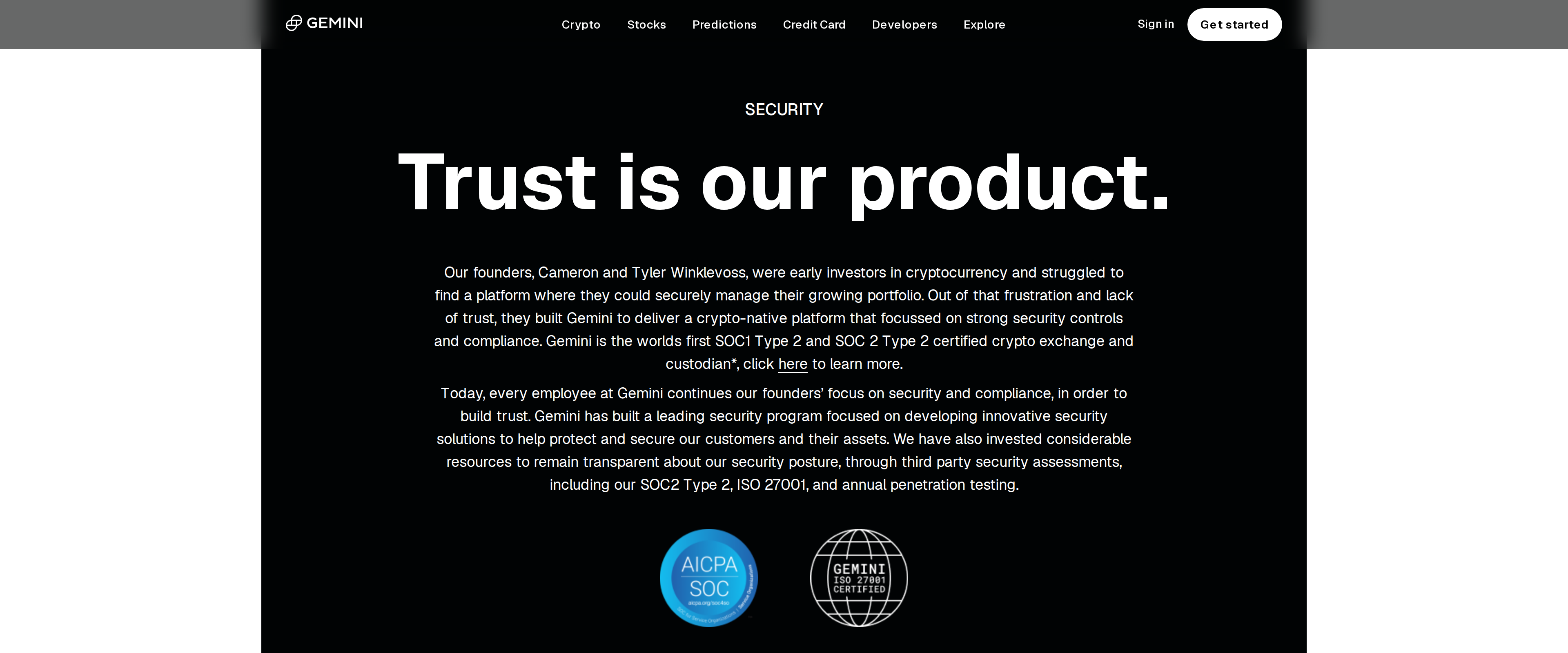
The company holds SOC 1 Type 2 and SOC 2 Type 2 examination reports from Deloitte, plus ISO/IEC 27001:2022 certification, and states it was the first cryptocurrency exchange and custodian to clear both SOC examinations. On top of that sits $125 million in insurance covering the exchange's hot wallet, a specific number few competitors state as plainly. None of that protects an account compromised by a weak password or a phishing link; it protects against a breach on Gemini's own systems, which is a narrower promise than marketing language sometimes implies.
What the compliance actually costs
Trust has a price, and on Gemini it shows up on the fee schedule.
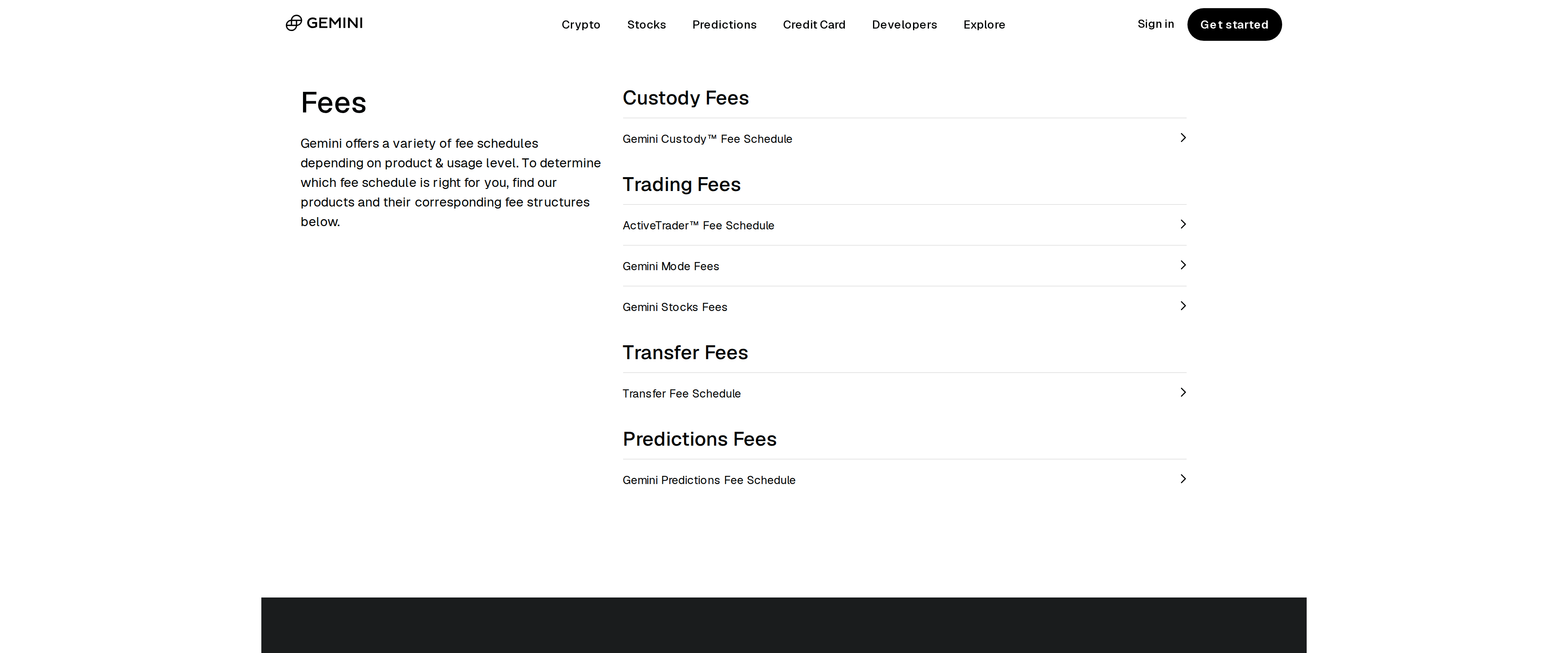
ActiveTrader, the exchange's advanced order-book interface, charges 0.600% maker and 1.200% taker at its base tier under the July 2026 schedule, which works out to $6 or $12 on a $1,000 order before any spread. That is noticeably higher than Kraken or Coinbase at comparable trade sizes. Buy through the basic mobile app with a debit card, Apple Pay or Google Pay and the platform adds 3.49% on top of the trading fee, a rate that turns a casual $200 purchase into an expensive impulse buy. ACH transfers stay free, and that remains the cheapest way to fund an account if you can wait the few business days it takes to clear.
Withdrawals carry their own line item
A $25 flat fee applies to USD wire withdrawals, a charge several competitors have dropped or reduced in the past two years. It is not large relative to a serious trading balance, but it is one more place where Gemini's pricing sits above the market rather than at it, consistent with a platform funding a heavier compliance and insurance program than most of its peers carry. Crypto withdrawals themselves are quoted per asset and network rather than as one flat number, so moving a small holding of a high-fee chain off the exchange can eat a noticeable share of the balance if nobody checks the rate first.
A history that explains the caution
Gemini's emphasis on audits is not accidental marketing. The exchange ran an Earn lending program that froze customer funds in November 2022 after its lending partner, Genesis, collapsed, leaving depositors locked out for well over a year before settlements returned most of the money. That episode predates the current SOC and insurance push, but it is the kind of history a compliance-first exchange would rather customers forget, and we think it belongs in this review rather than left out because Gemini itself moved on from it.
Who Gemini stopped serving in 2026
The biggest change to Gemini's footprint this year had nothing to do with fees.
On April 6, 2026, Gemini closed retail accounts across the UK, the European Economic Area and Australia, after those accounts had already spent a month in withdrawal-only status ahead of the shutdown. Customers in those regions who had built a multi-year history on the platform lost access outright, a reminder that a compliance-first exchange can still exit a market abruptly when the regulatory math stops working in its favor. Coverage now runs to 41 countries, with every US state, Puerto Rico and Washington DC still served, alongside a standard sanctions list that excludes countries like Iran and North Korea.
Verdict
Gemini earns its reputation the hard way, through audits and insurance disclosures that most exchanges do not bother publishing in the same detail, and that record is worth something to anyone who weighs custody risk seriously. It is not worth pretending the fees are competitive, because they are not, and it is not worth ignoring that three developed markets lost the platform entirely this year. Choose Gemini if you are in the US, trade at a size where the fee difference is a rounding error, and want the paper trail. Choose something cheaper if fees matter more to you than a SOC 2 report you will likely never read. This is not investment advice, only a summary of what we found opening the account ourselves.
Pros and cons
Pros
- Gemini was the first crypto exchange to pass both SOC 1 Type 2 and SOC 2 Type 2 examinations, audited by Deloitte.
- The exchange holds ISO/IEC 27001:2022 certification alongside its SOC reports, a level of third-party review few competitors publish.
- Hot wallet holdings carry $125 million in insurance coverage against an exchange-level breach.
- ACH transfers into a Gemini account are free, keeping the basic funding path free of surprise charges.
Cons
- ActiveTrader charges 0.600% maker and 1.200% taker at the base tier, higher than Kraken or Coinbase at comparable volume.
- Debit card, Apple Pay and Google Pay purchases cost 3.49% on top of the trading fee, an expensive way to buy on impulse.
- UK, EEA and Australian retail accounts closed entirely on April 6, 2026, cutting off users who had banked with Gemini for years.
- USD wire withdrawals cost a flat $25, a fee most competitors either waive or price lower.
Tested and written by The Ordertide Test Desk. Published , updated . This review is not financial advice. How we review.